
Turning Grief into Motion: Building a Future for Our Rare Remy

At the start of 2025, my 8-month-old son was diagnosed with an ultra-rare neurodevelopmental condition called DHX30 Syndrome (aka NEDMIAL: Neurodevelopmental Disorder characterized with severe Motor Impairment and Absent Language). Remy had been experiencing global development delays since he was a newborn, but I had done extensive genetic screening while pregnant, so I never thought it would come to this: a random, non-inherited mutation on a single base pair of DNA (out of 3 billion) spelling a life of intellectual and physical disability. With only 170 patients worldwide, we don’t know much, but we do know Remy’s life will look very different from what we imagined.
As expected, Remy’s diagnosis has led us through every possible emotion; however, grief is the one that lingers the most. It is present every day.

Mostly, I feel sadness that my child won’t experience the typical joys of childhood, much less adulthood. I both treasure and grieve playing with Remy’s peers, who seem so advanced and interactive. I’ve torn myself away from my vision of Remy going to the prom, attending his first day of college, starting a new job, traveling, and building his own life. I feel selfish, but I mourn the independence of my later years of adulthood. I worry about what Remy’s care and group home will look like when I’m no longer able to be his keeper. I stress about the seemingly inevitable scenario of sitting in an unfriendly ER while he is in distress, but unable to communicate his needs. My hair loss post-diagnosis was 10x worse than what I experienced postpartum. That is what grief looks like sometimes.
As I started this journey, I couldn’t help but look at the Grieve Leave movement in a more understanding light. Tragedy struck my family, but the rest of the universe kept marching on. Our support network stepped up, but it still felt like we never caught our breath. It’s not hyperbole to say: the universe ripped my beating heart out of my chest, ran it through a meat grinder, and somehow every morning, my zombie body was supposed to keep going on. Shouldn't the sun have forgotten to rise the next day?
If there’s anything I know how to do in life, it’s… to do. Following Remy’s diagnosis, I have become a whirlwind of activity. I have a name, and I am coming for it. For the first time, I understand that parental strength is the most powerful force in the universe. I am mining my best qualities and network to secure the resources that my son needs to maximize his potential. I am not accepting mere management of his condition until I have pursued all avenues that could improve his quality of life. My husband and I have never accepted anything less than extraordinary for ourselves. Why would we accept anything less for our son?
Above all, I have to keep in mind the most important thing — his happiness and well-being (and ours!). I am a force to be reckoned with.
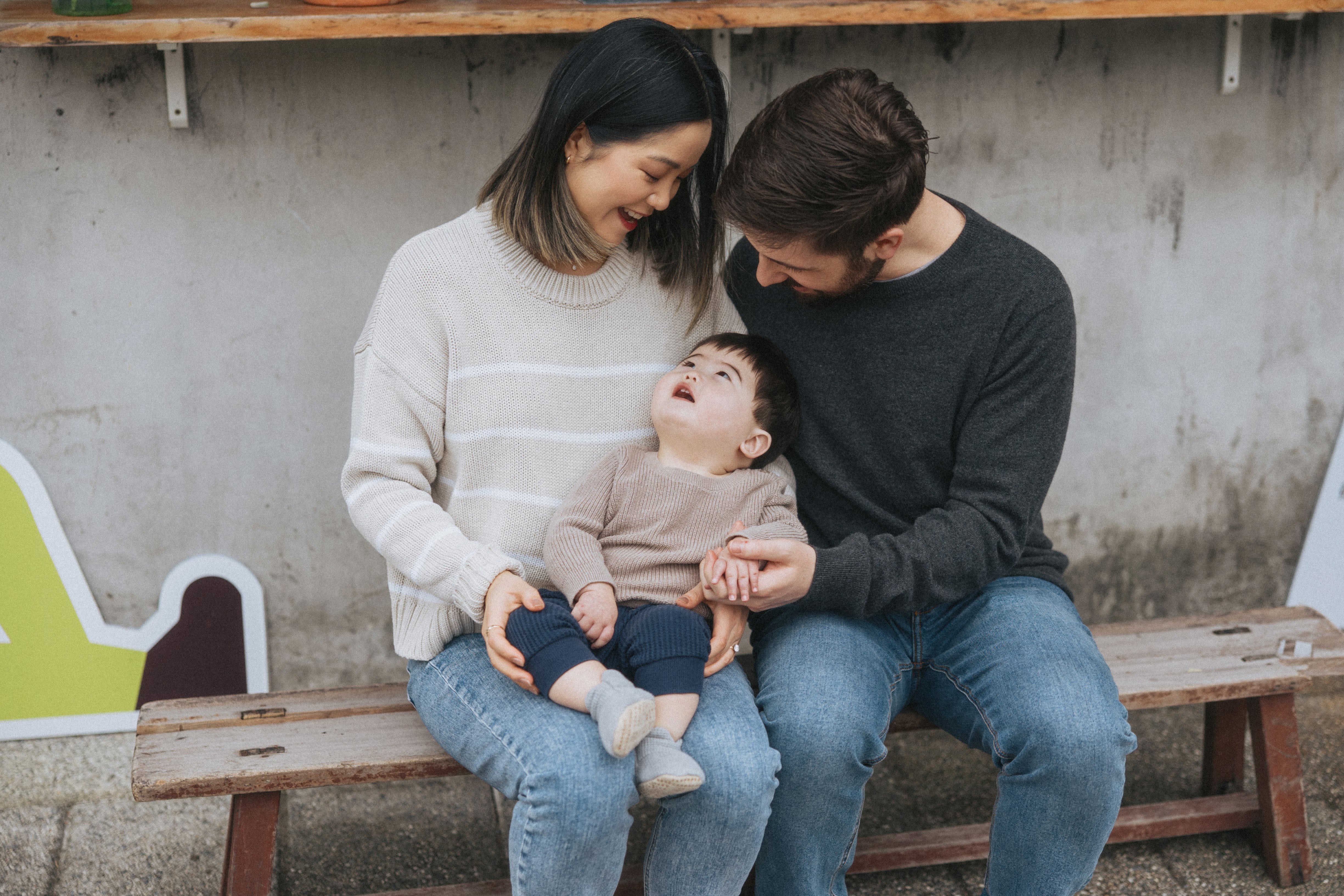
Like all great efforts, I can’t shoulder this alone. The biggest ray of light to come out of this situation is the outpouring of support that my husband and I have received. A constant barrage of flowers graced my home in the month after Remy’s diagnosis. New and old friends taking trains, planes, and automobiles showed up at my doorstep, even at a moment’s notice. Neighbors dropped off soup and sweets. Daily shots of love lined my text messages, and I saved every uplifting message, gift, and interaction in an email draft titled “Sunshine,” so I could tap into it when I needed it. Importantly, friends and family across medical, research, and non-profit fields turned into a brain trust for Remy and helped us become ultra-rare disease experts. Our year 1 wins include:
- Remy’s acceptance into an anti-sense oligonucleotide (ASO) drug development pipeline at n-Lorem
- New research investigations into the DHX30 mutation at top US research universities
- Development of a DHX30 mouse at The Jackson Laboratory for research purposes
- Creation of the Rare Remy Foundation, our lean DHX30 research-focused organization, and a love song to Remy
It goes without saying, we have a lot on our plates. This experience has taught me that I need to focus on what is most important and pull back from that which no longer serves me. Notably, this has been illuminating for a number of friendships. Otherwise, the most significant change is social media because there is also this painful binary: I love keeping up with you and seeing your beautiful, growing children online, but it is also heartbreaking. I hope you can understand that at this junction, minimizing my relationship with this artificial social construct as I struggle to navigate the real world is what’s best for me.

There is a lot I am afraid of.
Unintended isolation scares me.
Every. Single. Thing. About Remy's future terrifies me.
Years of therapy have taught me that the only healthy way to make it through this is by facing my emotions and graduating to acceptance. I am optimistic that I will find my footing eventually. But it’s a tough battle when you’ve been parenting on hard mode since day 1. Every time we find some semblance of normalcy, it all comes tumbling down again. But we have to keep moving forward.
If you are able to assist with awareness, fundraising, or research partnerships, please reach out for Remy. You can find us at the Rare Remy Foundation, where our mission is to improve the lives of Remy & his cohort by accelerating research efforts to understand and treat the DHX30 mutation.


.png)
.png)
.png)