

Why Pet Loss Belongs in Bereavement Leave
I can picture that day like it was yesterday. I’m wearing a sleeveless black dress.
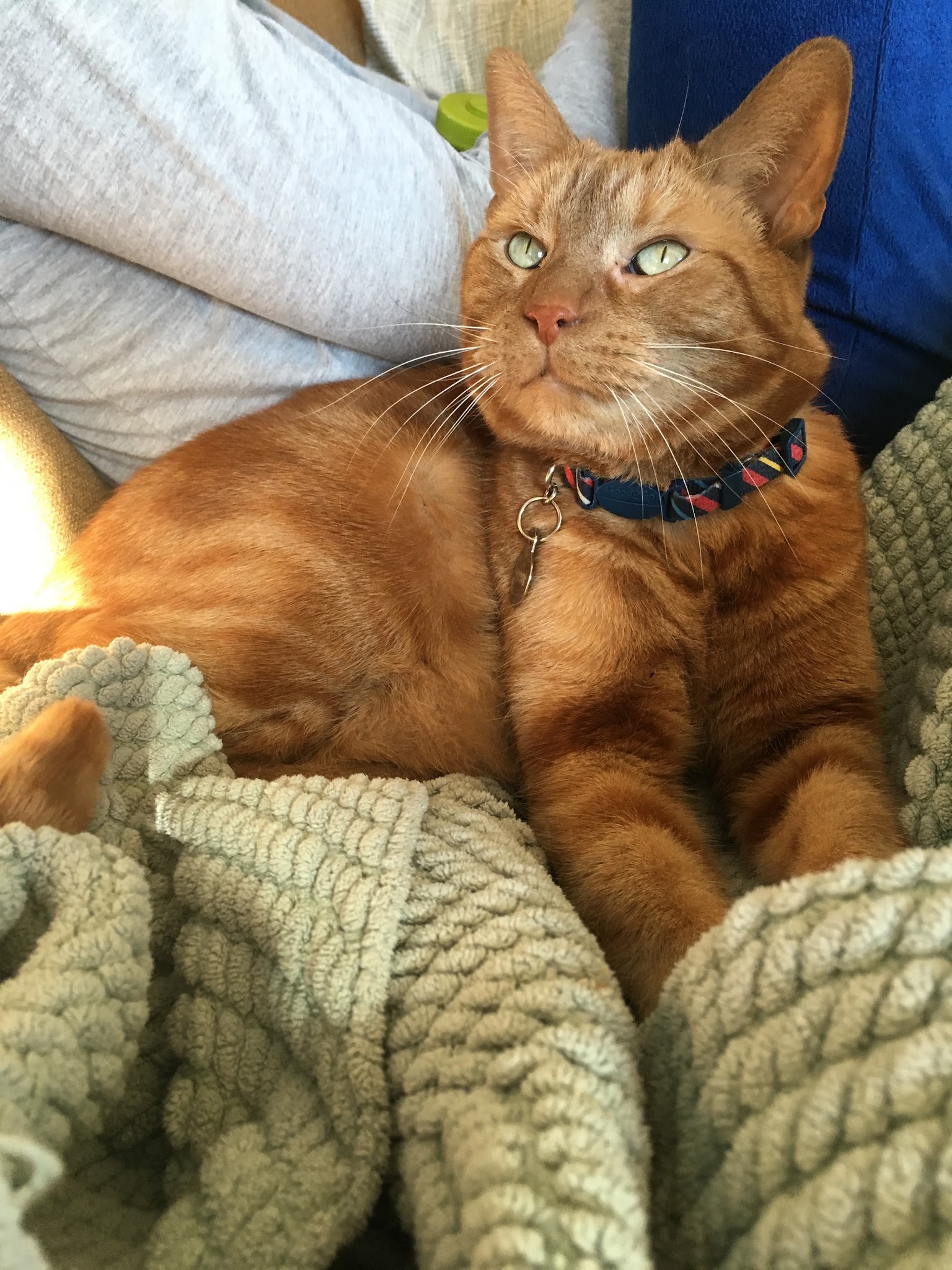
I’m pacing the first floor of our house, making loops down the hallway, through the kitchen and back to the couch, where our elderly cat Copper is sleeping, a tiny pile of fur and bones.
It’s his last day. We have a veterinarian scheduled to come to our house in just two hours to help him cross the rainbow bridge, and I can’t do anything but pace and sob.
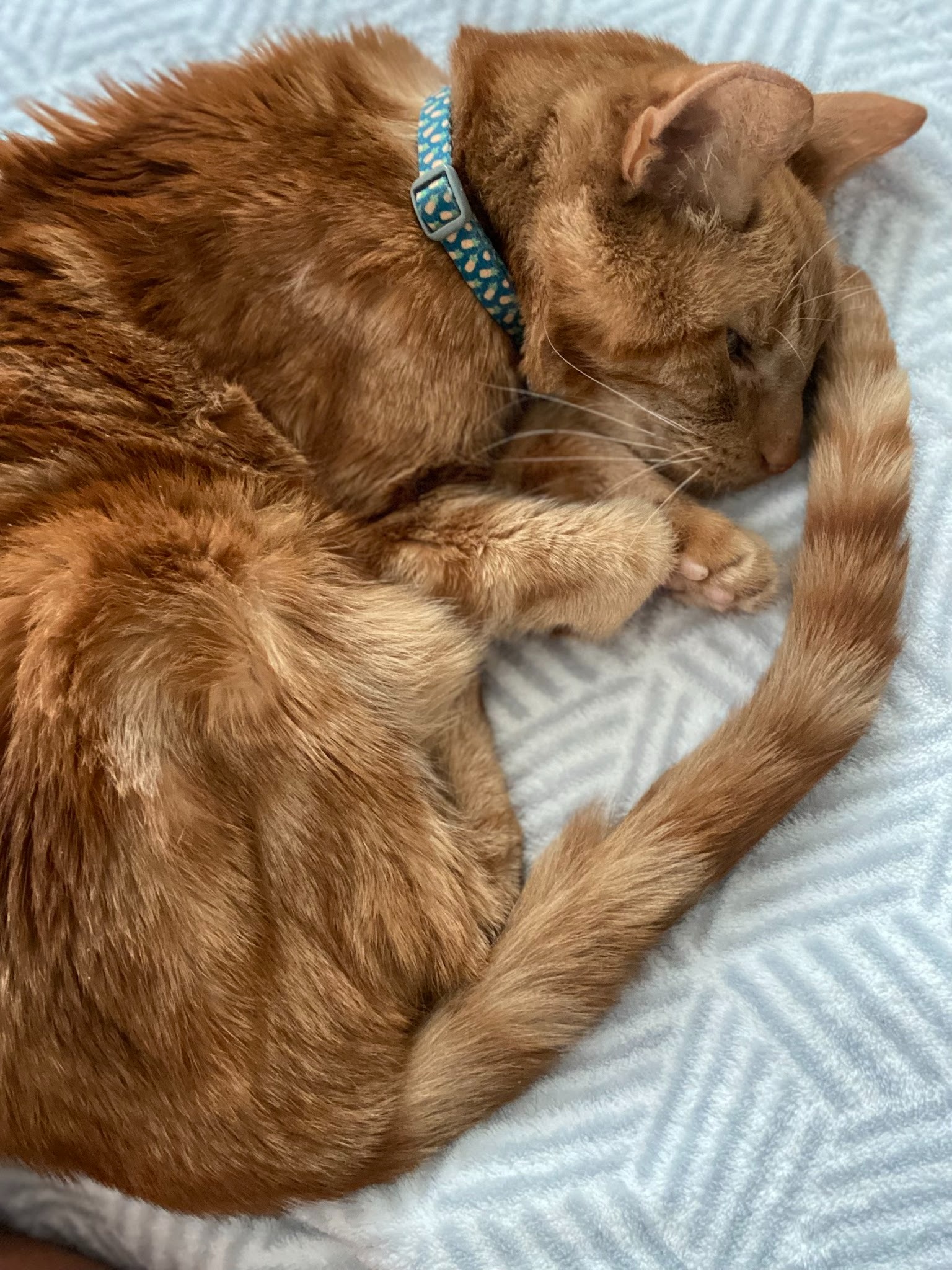
Later, after Dan, my husband, has carried his tiny five-pound body to the car and we’ve said our final goodbyes, we go for a walk.
We can’t stand to be in an empty house, without his tiny paw patter and his meows.
We head down the street, holding hands, and up pulls my best friend Melissa. She admits she’s been circling the block just worrying about us, wanting to be close, knowing how hard saying goodbye to a pet is.
The next day, we packed up the car, and headed to the beach to stare at the ocean, while re-watching old videos of Copper and crying.
Imagine if I had to return to work the next day instead.
I believe losing a pet is a unique kind of hard. I’ve lost other important beings to me throughout my life, but there’s something about a pet death that sits in this really gooey, soft part of your heart.
Copper was my once-in-a-lifetime soul pet. The best boy. He did things for me that no reasonable human could do: he was a constant companion on my lap during work meetings, a shadow in the middle of the night when I couldn’t sleep, and a great belly to stick my face into when I just needed a break.
Grieving him takes time. Space. And honestly, I still get hit by waves of missing him.
.jpg)
Grief, my wise therapist Kirsten tells me, is something you always carry with you. Sometimes it’s the size of a suitcase, sometimes it’s the size of a dime in your pocket, it just depends on the day. No matter what, the grief is always with you.
So a few years later, when one of my teammates was telling me about how her beloved 12-year-old pup was having a hard time going up and down stairs, I thought to myself… grief is coming.
She’s going to go through that same loss. We need to be ready.
I’m the CEO and Founder of a boutique PR firm called Forthright Advising. We’re an all-remote agency, and we work exclusively with organizations that support children and their families.
When I founded Forthright, I set out to build a better agency model, one that puts people first, and supports them so they can show up healthy and whole for our clients.
Our employee handbook is full of people-centered policies. We have bereavement leave for fertility or pregnancy loss. We give a sabbatical for every five years of service. We are closed on Election Day so our teammates have time carved out to vote and volunteer.
But pets? We didn’t have anything carved out for the loss of a pet.
Luckily, the benefit of owning your own company is that when there’s a change you wish to see in the world, you get to just… make it happen. At least on a micro level.
So I reached out to Grieve Leave, and asked for examples of pet bereavement policies. I talked with our employment attorney. And I did my research.
There’s… not much out there.
But when you work with the right attorney, they figure it out. They say, “that makes sense. Let’s add in pets.”
Here’s the exact language from our employee handbook where we define a family pet as an immediate family member as part of our bereavement policy:
“Members of the immediate family are defined as the employee’s partner, parents, grandparents, child, sibling, grandchild, parent-in-law, and corresponding step-relatives. The employee’s own family pet living in the employee’s home is also considered an immediate family member.”
And even if the pet you’re grieving isn’t your direct family member, we also offer non-family-member funeral leave. Because if anyone knows that a family is defined differently by each person… It's us. We see families of all different shapes and sizes.
Our handbook policies also offer flexible sick days that allow our employees to take off to care for their own mental health or the mental health of others. Those can be used for grief, of course.
I have known what it feels like to push through my grief or work through big life moments.
I can distinctly remember being in my late 20’s, pre-Forthright, sitting on the floor of a new apartment, surrounded by moving boxes, banging away on my laptop. Giving everything to work while my Mom and husband worked around me to move us into our new house.
That’s not how it’s supposed to be.
We should be able to take the time we need during big life moments.
When your constant companion, your best friend, your comedic relief, and the one who knows all your secrets is on their way out?
Please don’t show up at work.
My favorite poet, Andrea Gibson, wrote a stunning tribute to pet deaths many years ago in their newsletter titled Loving Those Whose Lifespans Are Far Shorter Than Our Own. The lines that held me together at the end of Copper’s life were:
Do dog’s lives flash before their eyes right before they die? What will Willow see? I know what Willow will see. Willow will see Emily. Willow will see Emily and think, I could not have had a more beautiful life, Mom. And she couldn’t have. She was so lucky to have Emily, who is right now racing back home to say goodbye. Though, when she gets here she won’t actually say goodbye as much as she’ll say thank you thank you thank you, over and over. Thank you thank you thank you, Emily will say, as she opens the door to infinity, to set yet another animal free.
Use your bereavement leave.
Be home.
Say thank you.
.jpg)
Author: Katie Test Davis is the Founder and CEO of Forthright Advising, a PR agency that works exclusively with organizations that love kids. Copper Davis was originally her husband Dan’s cat, but quickly became Katie’s once-in-a-lifetime soul pet. She was lucky to get a two-for-one deal when she married Dan. The last thing she ever said to Copper was thank you.


.png)
.png)
.png)